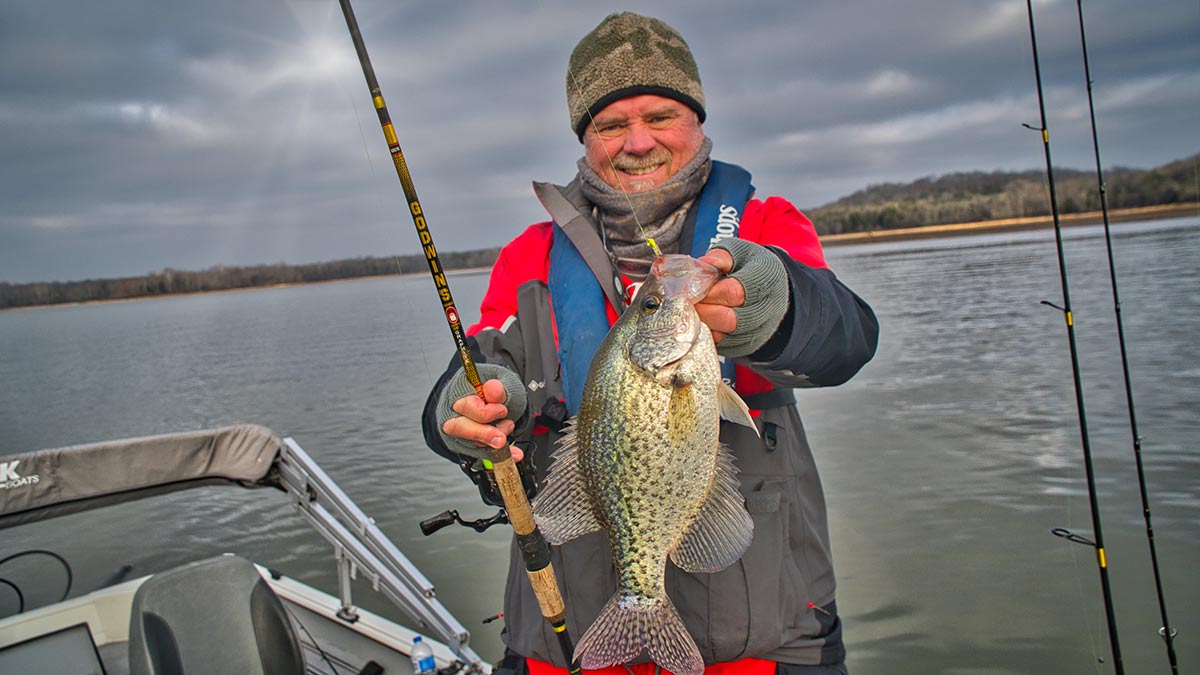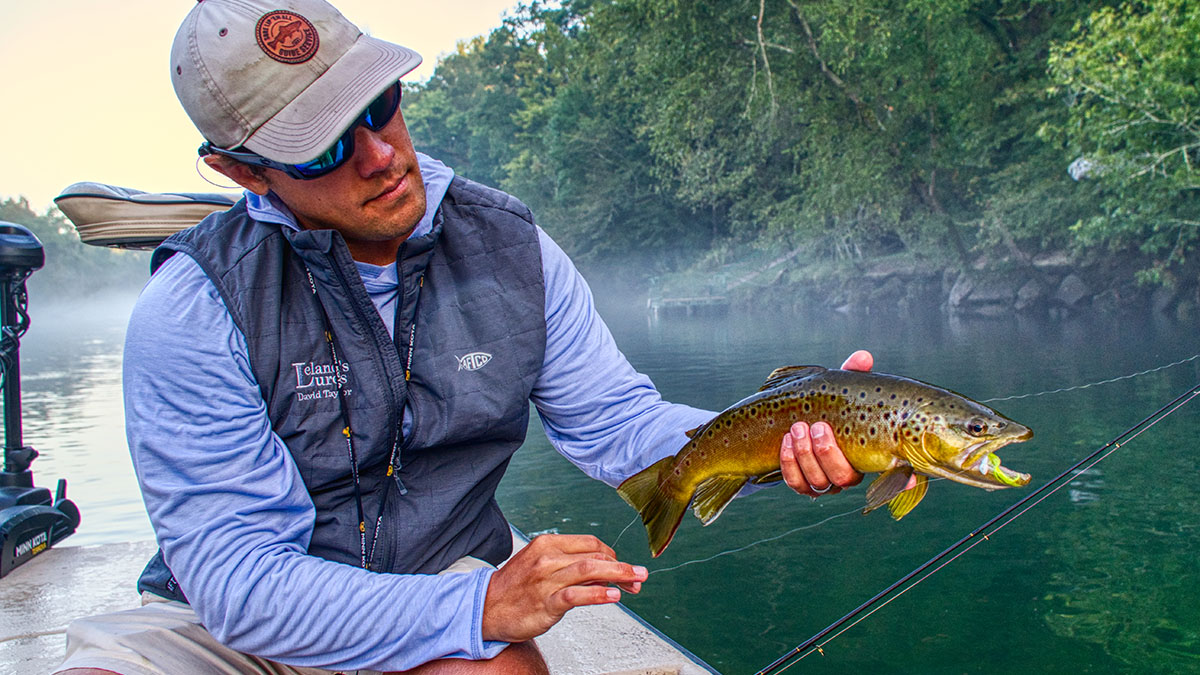

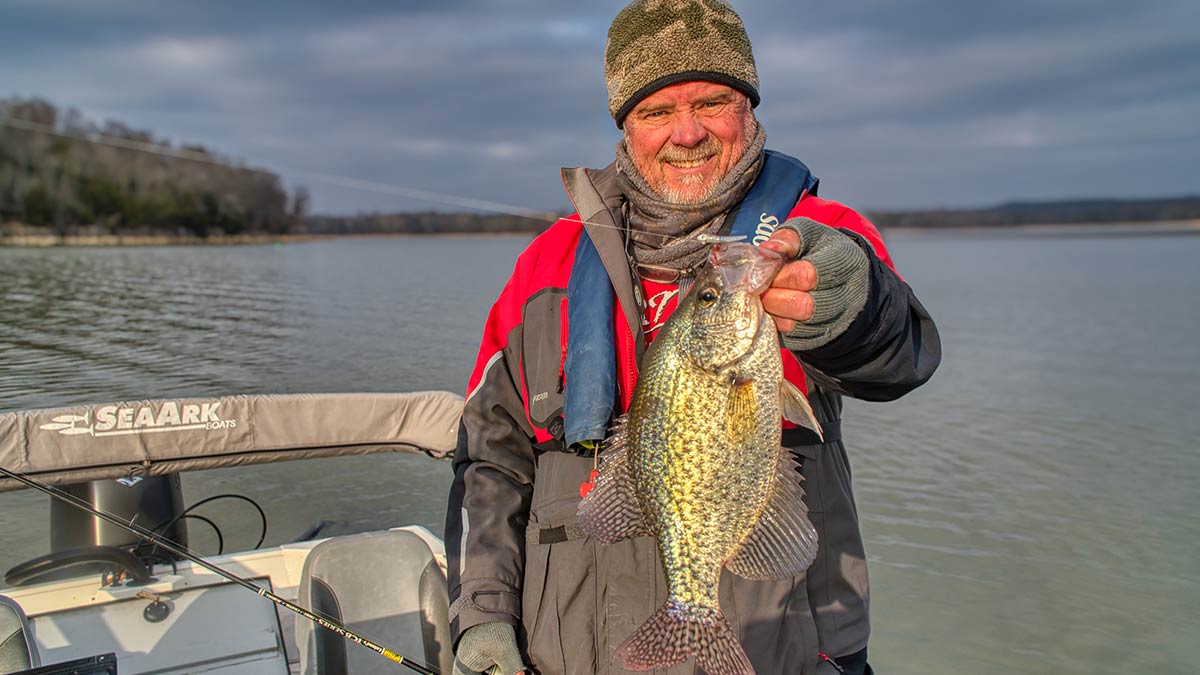
Wintertime gives a lot of anglers a slight bit of depression due to the days being shorter, and the weather being less cooperative with more things to deal with like ice on boat ramps, ice on parts of the lake you want to fish and a slower metabolism that often makes fishing a bit slower. But there are some tips to catch winter crappie better that will certainly give anglers a greater rate of success when the fishing slows and the bites get fewer and farther between.
When talking winter crappie fishing, several factors can help or hurt your fishing this time of year. To combat that we want to cover a few key aspects that include the following:
- Where to look for winter crappie
- What lures perform better in cold waters
- How to modify your approaches for cold-water crappie
Finding winter crappie
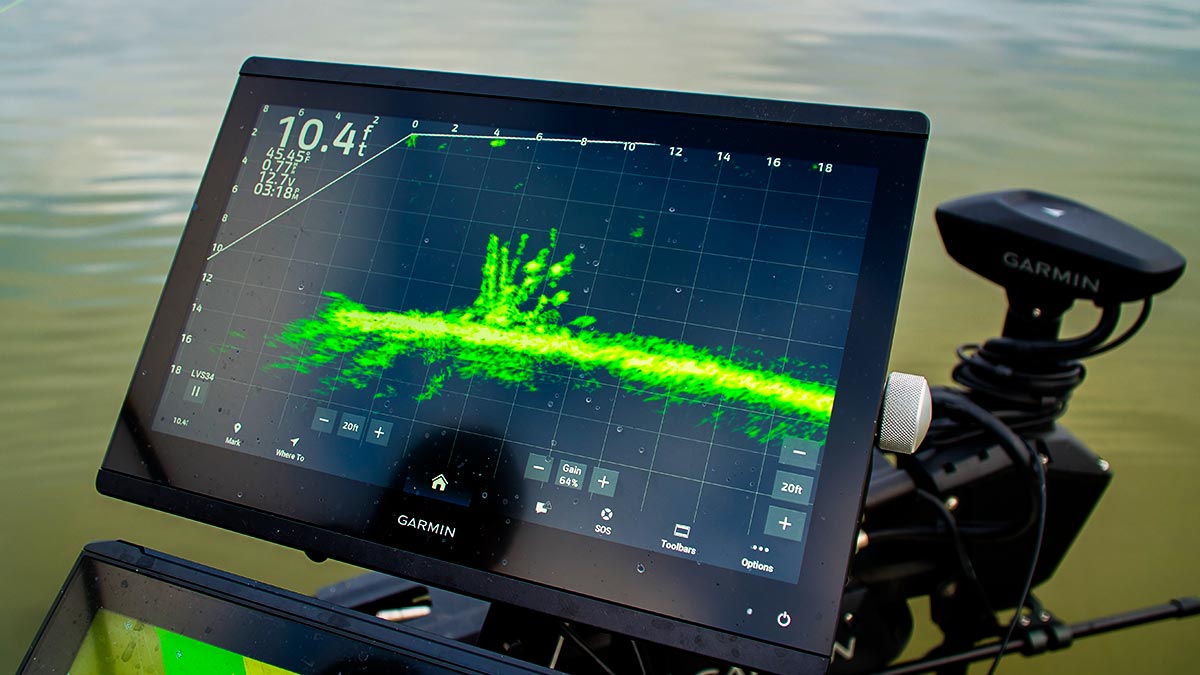
The first part of any plan to catch fish is of course finding fish. And with water temps being a bit lower than the crappie prefer, it can narrow their locations down to some easy to define areas. While there are most certainly main-lake crappie deep in the winter, there might be an easier way to seek them out.
Our pros pay more attention to contours in the winter than probably any other time of the year. That's because crappie are opportunistic. They will go where there are food opportunities and that can often change throughout the day and throughout the winter. When we say contour we are talking about a defined edge where a flat section of the bottom meets a channel. It doesn't have to be a hard defined channel, but we often find in the winter the harder edges hold a lot of fish.
I think if you can find a creek channel edge, or "ledge" as many folks call them, you have a transition zone that narrows your search area significantly when hunting crappie in the winter. Because you can move from very deep water to very shallow water in just a few feet. So if the crappie have slid up shallower because it's calm and sunny and they want to absorb some warmth or followed the bait up into some shallow cover you can find them. Or if they are holding off the edge waiting for conditions to improve you can also find them.
These creek channel ledges offer a contour change, which black crappie often prefer this time of year, as well as the natural location where a lot of natural cover exists on many lakes.
"On lakes like Percy Priest or Kentucky Lake, you will find many of the natural stumps and log jams in the lake are along the edges of flat shallow to steep deep transitions," said Percy Priest regular and B'n'M Poles Prostaff Manager Kent Driscoll.
You can also use these channel edges as an interstate to figure out what part of the larger area the best concentration of fish are found. So you will hear anglers talk about fishing the last third or first third of a creek arm or bay. They are talking about searching for the best concentrations of crappie in a larger given area based on where they are in their progression to move shallow and spawn.
In the winter, most female crappie are well into their egg production and so much of their behavior is predicated around that process of moving shallow to spawn when the water reaches the right temperatures and the amount of light penetration is optimal to hatch their eggs. So that's why you also can't overlook roaming crappie in the winter who might be up in the water column over deep water, or up roaming much shallower than you imagined in the winter due to their need to warm their eggs to further progress into the spawn. So as you get to the tail end of the spawn, the defined edges give way to the more subtle flats as they move to get to the optimal depth for protection and hatching of their eggs.
Lures for cold water crappie
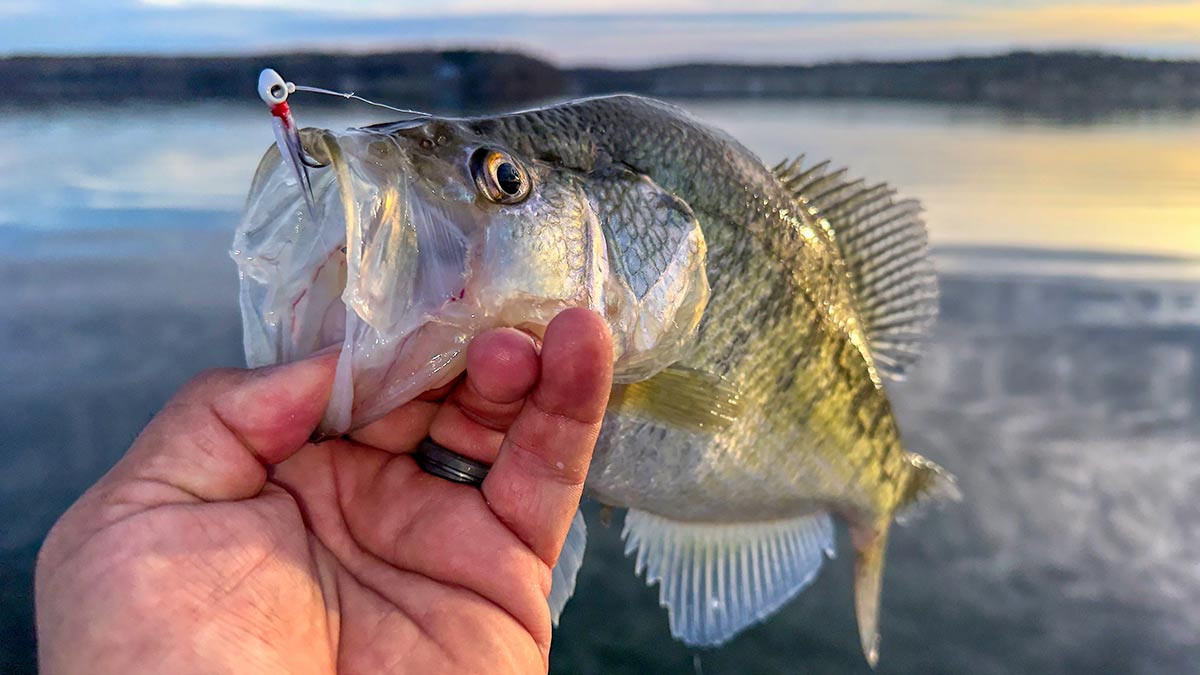
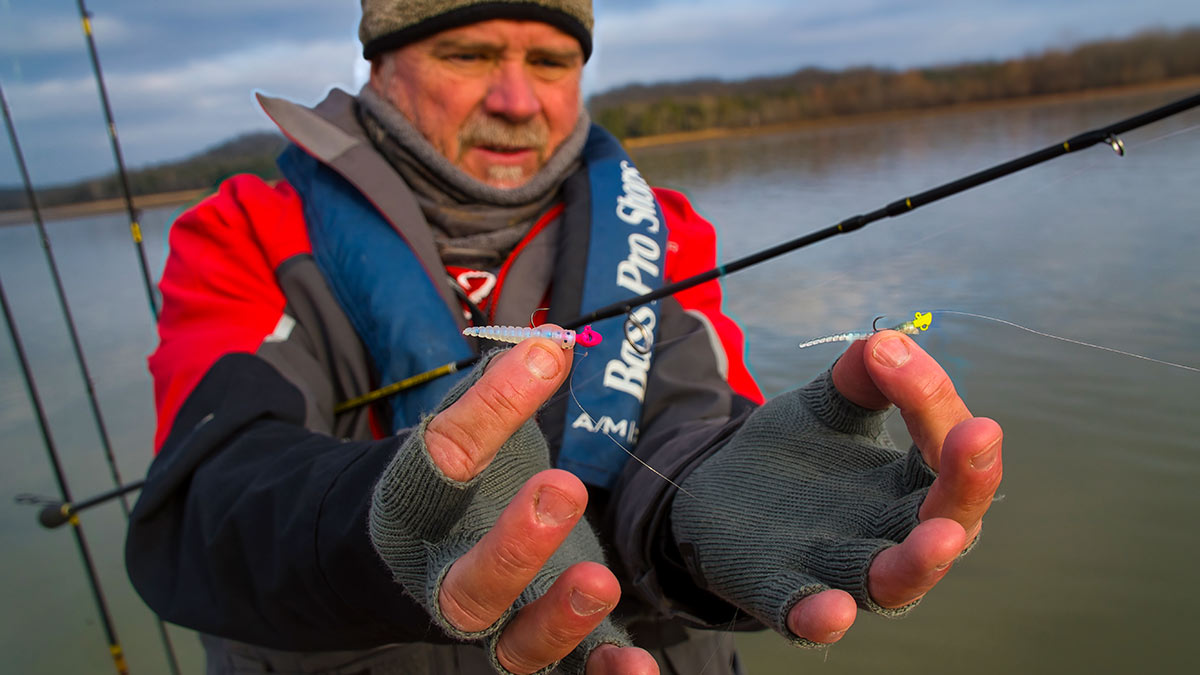
In the winter, crappie often move to smaller food sources that require less energy expenditures to consume a lot of fat and protein. Things like larvae, worms and other microorganism will fill some of the void of shad consumption in the less active months. Because of this, downsizing your lures can often get you a lot more bites with sluggish crappie. That's not to say a big jig won't get bit in the winter in the right conditions, but speaking just on averages, your smaller lures and hair jigs tend to really shine in the winter months.
Hair is a special material that still has a lot of life like action when the water is super cold and can make certain plastic shapes a lot more rigid with a lot less action. But shapes with smaller thinner tails can be great options to give signs of life without being too obtrusive to crappie looking for an easy meal with less effort.
Some of our favorite choices for winter crappie would include the following:
- Trout Magnet on the new Eye Hole Tungsten jighead
- Trout Magnet Cross on a Tungsten Trout Magnet jighead
- Pop-Eye and the new Tungsten Pop-Eye jigs
- Eye Hole Hair Jigs
- Crappie Magnet shortened on a 1/16 ounce Eye Hole jighead
Crappie anglers have really fallen in love with the Trout Magnet cross on a light jighead for winter crappie. The Cross closely mimics the larvae found in a lot of crappie's stomachs this time of year. Pinch off a few segments to make a smaller profile with an ultra thin tail that really moves in the coldest of waters.
The new Pop-Eye Tungsten jig is another new bait that a lot of crappie fishermen are loving this season. It was just released in December but it's already becoming a staple this winter. The 1/16 ounce jig allows you to add scent in the patented Eye Hole head, and has expertly tied feathers that breathe and twitch with the subtlest of movements.
At the tail end of winter when the crappie feed heavily on shad to fatten up for the rigors of spawn, we transition back to our bigger profiles and larger plastic bodies and jigheads.
Best presentations for winter crappie fishing
The Crappie Magnet lineup offers all of the options you could want regardless of how you like to fish. If you're a spider rigger, our baits will give you a lot of options to show the fish on the multi-rig pushing platform. If you like to single pole with a long rod, our hair jigs and small plastics give you the perfect morsel to hold in front of a stubborn crappie. And if you still like casting in the winter, we have a variety of baits that fit each way to fish.
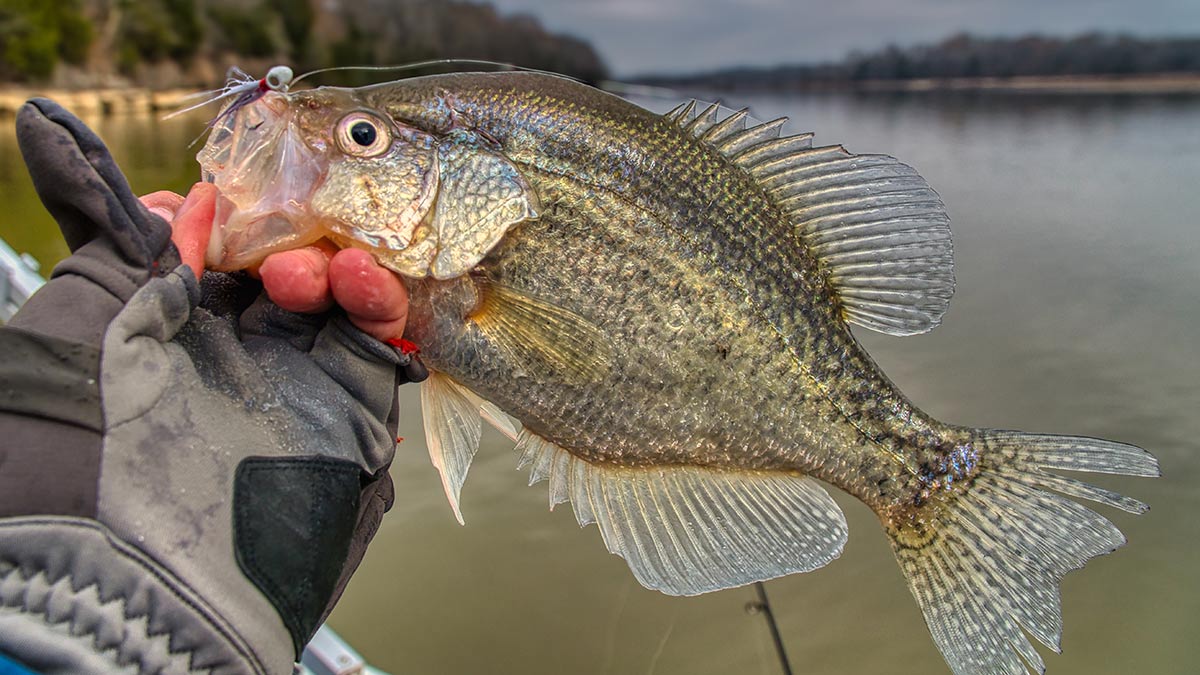
Often in the winter, the name of the game is keeping a bait in front of a fish as long as possible. That can be done very easily vertical jigging with long rods. This is often the choice of anglers. Weather you dipping visible cover like standing trees in deep water, or using your electronics to stay on deep cover, a vertical jig presentation can often be a good way to keep your jig in front of the fish until they finally get the nerve to bite. It's a slow patient way to fish but very effective in the winter months where crappie can often have a tendency to bury up in cover what can be hard to cast to and catch fish without hanging up.
"I cast to fish a lot in the winter, but I downsize to 2-pound line and a 1/32 ounce Tungsten Trout Magnet head and Trout Magnet body," Kent Driscoll said. "If you do cast to fish, chasing suspending schools with your casting setups can be done by downsizing your line and your baits. We often fish as small as 2-pound line in the winter so we easily cast 1/32 or 1/64 ounce jigs. Throwing lighter jigs can be more difficult and slower to fish, but that is what you want in the winter. You want to force yourself to reel as slow as possible to keep your jig in their strike zone as long as possible."
If you locate fish that are more active, it can be a blessing because you can step up to a little heavier jighead like a 1/16 Tungsten Eye Hole jig get your baits to the fish quickly and efficiently.
If you are bank fishing, areas that provide pinch points with deep water can be great places to fish. One of the best sources of this setup is under a bridge. Usually two stretches of land come together to funnel fish into a narrower area. The bridge itself is structure and there is often deep water and other cover near a bridge in the form of big rocks and wood. All of these setup as a likely place to catch crappie in the winter.
So spend time finding channel edges and cover near those. Choose smaller baits and baits with feather and fibers can look very alive in colder waters. And then focus on keep your baits in front of where you think the fish are for as long as you can. Vertical presentations, slow horizontal presentations and smaller offerings will help you put a lot more crappie in your hand.